
 info@globalu.com


Explains the difference between accounting costs and cash flows. Learners explore why investment analysis focuses on cash generation and how financial information is interpreted from a cash flow perspective.
Follow us on :

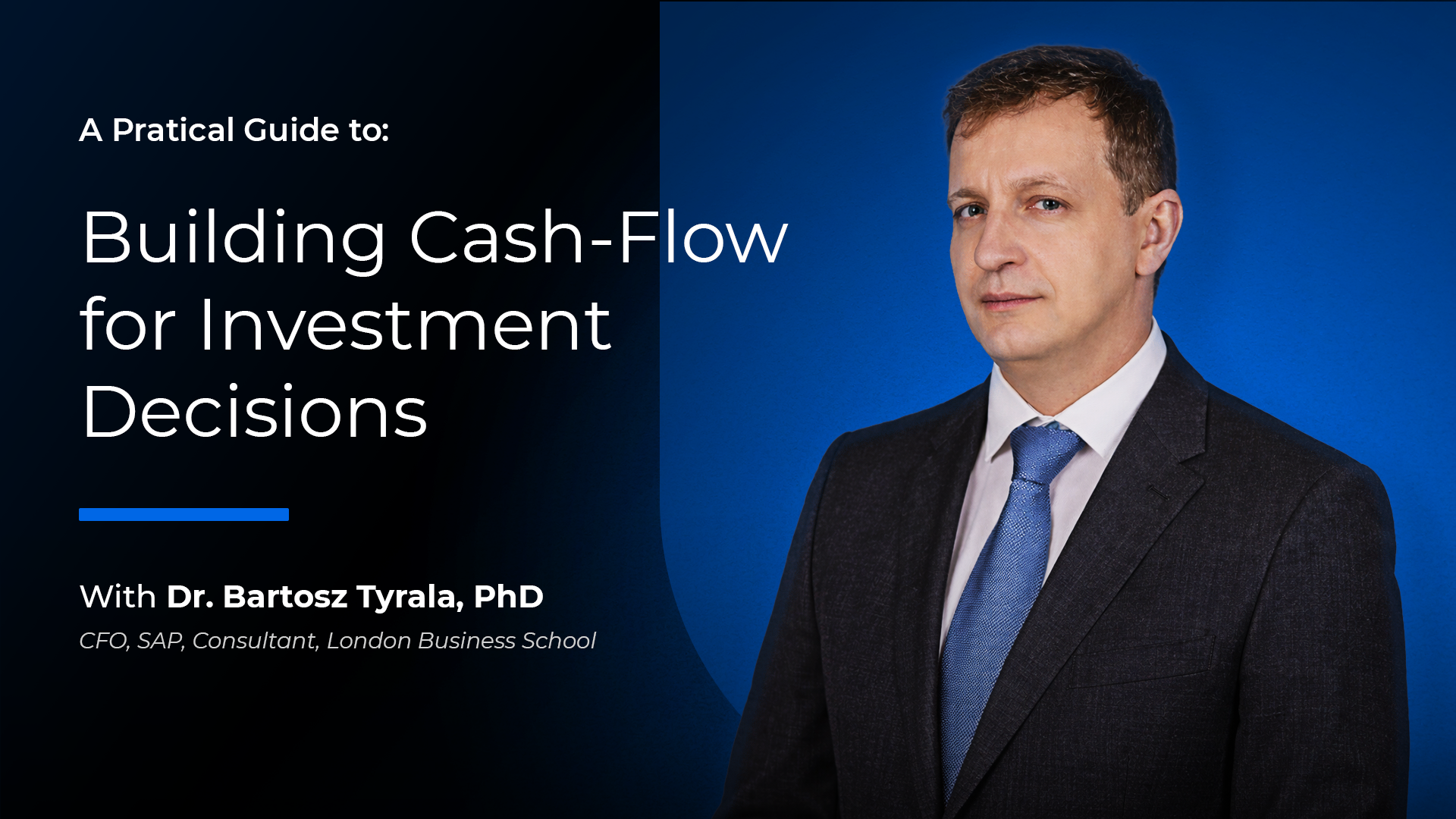
A Practical Guide to Building Cash Flow for
Investment Decisions
This is part of Finance Fundamentals Package

A Practical Guide to Building Cash Flow for Investment Decisions
This is part of Finance Fundamentals Package
Self - paced Programme Overview
This self - paced programme is part of Finance Fundamentals Package by our expert Bartosz Tyrala. Finance Fundamentals Package includes: Guide to Activity - Based Costing, Guide to Cash Flow, NPV, IRR and Investment Valuation, Guide to Building Cash Flow for Investment Decisions and Guide to Understanding Financial Statements
Investment decisions depend on understanding how business activities translate into cash generation over time. This programme introduces the principles used to analyse cash flow in investment contexts and explains how accounting information is translated into cash flow analysis. Through structured explanations and real business examples, learners develop a clear understanding of how working capital, capital investment and financial assumptions influence cash flow interpretation..
Programme Structure
Key Module 1: Cost vs Cash: Foundations of Cash Flow Thinking
Key Module 2: Net Working Capital: Definition, Components, and Cash Flow Impact
Introduces the concept of net working capital and explains how changes in receivables, inventory and payables influence cash flow. Learners explore how working capital affects business liquidity and financial interpretation.
Key Module 3: Working Capital Models and Forecasting
Explains how working capital relationships are represented in financial models. Learners explore how operational assumptions influence forecasts and how working capital dynamics appear in financial projections.
Key Module 4: CAPEX, Depreciation, Amortisation, and Tax Effects
Introduces the financial concepts associated with capital investment. Learners examine how capital expenditures, depreciation, amortisation and taxes influence financial statements and cash flow interpretation.
Key Module 5: Relevant (Incremental) Cash Flow in Investment Decisions
Explains how analysts identify relevant or incremental cash flows when evaluating investment opportunities. Learners explore how financial analysis isolates the cash flows associated with specific decisions.
Key Module 6: Building a Basic Investment Cash Flow Model
Introduces the structure of a basic investment cash flow model. Learners explore how financial assumptions, working capital and capital expenditure are combined to represent cash flow patterns over time.
Business Outcomes
After completing this course, learners understand the principles used to analyse cash flow in investment contexts. They recognise how working capital, capital expenditures and financial assumptions influence cash flow interpretation and can explain how accounting information is translated into investment cash flow analysis.
Is this right for your organisation?
This programme is suitable for organisations introducing managers to investment analysis concepts and financial modelling terminology. It works well for professionals in operational, commercial or project roles who need to understand how cash flow analysis supports investment discussions.
Programme Impact
The programme builds a shared understanding of how investment cash flow is described and analysed in financial discussions. This helps organisations interpret financial analysis more consistently and supports clearer communication when evaluating investment opportunities.