
 info@globalu.com


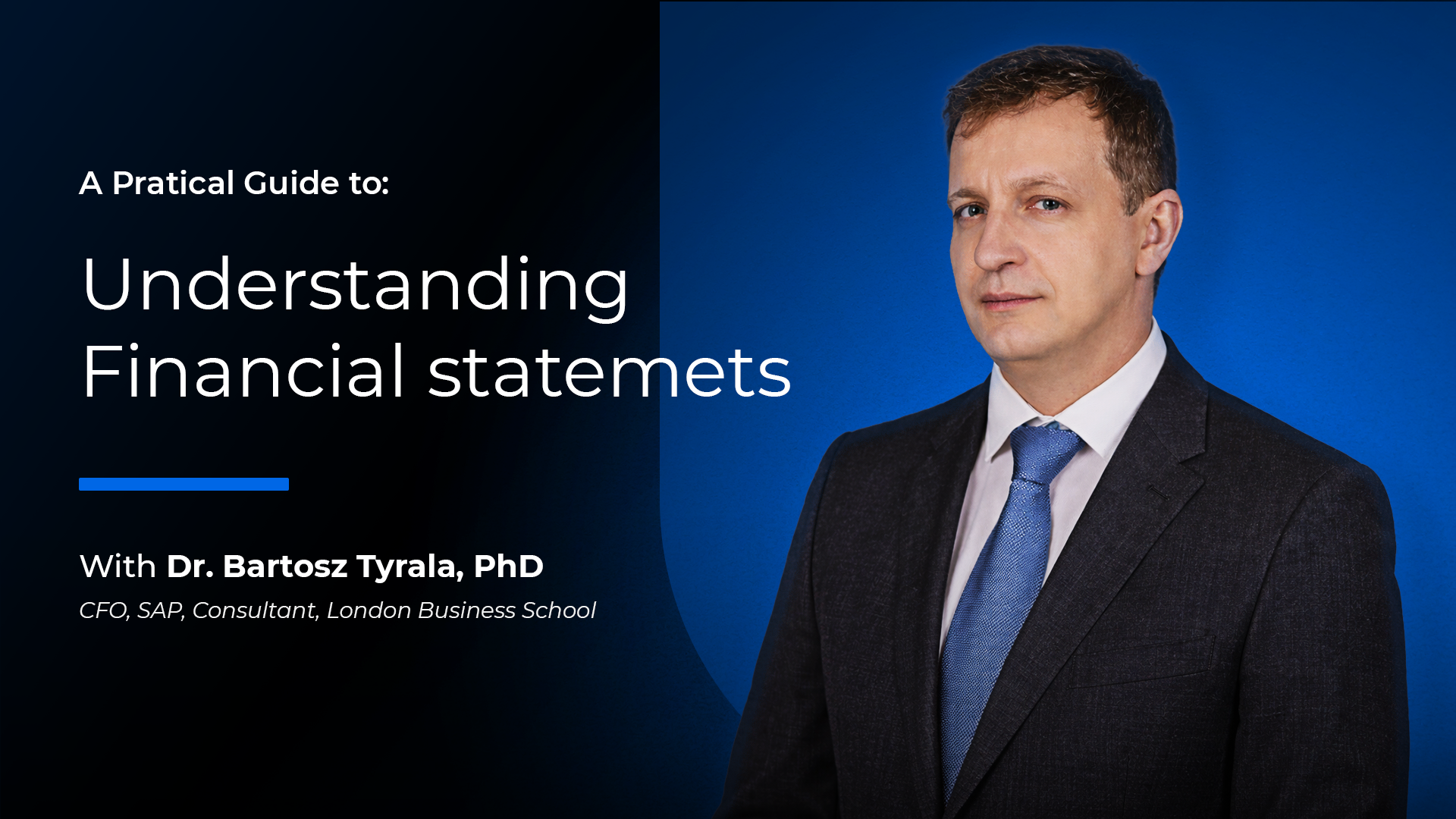
Explains why organisations produce financial statements and how different stakeholders use them. Learners explore the role of financial reporting in describing business performance, financial position and decision-making context.
Follow us on :

Practical Guide to Understanding Financial
Statements
This is part of Finance Fundamentals Package

Practical Guide to Understanding Financial Statements
This is a part of Finance Fundamentals Package
Self - paced Programme Overview
This self - paced programme is part of Finance Fundamentals Package by our expert Bartosz Tyrala. Finance Fundamentals Package includes: Guide to Activity - Based Costing, Guide to Cash Flow, NPV, IRR and Investment Valuation, Guide to Building Cash Flow for Investment Decisions and Guide to Understanding Financial Statements
Financial statements provide the primary language organisations use to describe performance, financial position and cash generation. This programme introduces the structure and purpose of the Balance Sheet, Income Statement and Statement of Cash Flows, and explains how these statements relate to one another. Through clear explanations and practical examples, learners develop a structured understanding of how financial information represents business activity and financial health..
Programme Structure
Key Module 1: Introduction to Financial Statements: Purpose, Structure, and Stakeholders
Key Module 2: The Balance Sheet: Structure, Classification, and Interpretation
Introduces the structure of the Balance Sheet and explains how assets, liabilities and equity represent a company’s financial position. Learners explore common classifications and how Balance Sheet information is interpreted.
Key Module 3: Income Statement Analysis: Profitability and Presentation Formats
Explains how the Income Statement describes revenue, expenses and profitability. Learners examine common presentation formats and understand how financial performance is represented in financial reporting.
Key Module 4: Statement of Cash Flows: Methods, Activities, and Analysis
Introduces the structure of the Statement of Cash Flows and explains operating, investing and financing activities. Learners explore how cash flow reporting complements profit-based financial analysis.
Key Module 5: Linking the Three Financial Statements: Interconnections and Adjustments
Explains how the Balance Sheet, Income Statement and Cash Flow Statement are connected. Learners understand how financial transactions influence multiple statements and how adjustments affect reporting relationships.
Key Module 6: Working Capital & Financial Health: Ratios, Risks, and Red Flags
Introduces common financial ratios used to interpret liquidity, efficiency and financial stability. Learners explore how analysts interpret financial signals and identify potential financial risks.
Business Outcomes
After completing this programme, learners understand the structure and purpose of the main financial statements and the terminology used in financial reporting. They recognise how financial information describes business performance, financial position and cash generation, and can explain the relationships between the Balance Sheet, Income Statement and Cash Flow Statement.
Is this right for your organisation?
This programme is suitable for organisations introducing managers to financial reporting concepts and financial statement terminology. It works well for professionals in operational, commercial or technical roles who need to interpret financial information in business discussions.
Programme Impact
The programme builds a shared understanding of financial statement structure and terminology across teams. This helps organisations interpret financial information more consistently and supports clearer communication when discussing financial performance and business health.