Skip to main content Skip to footer

Workshop Overview

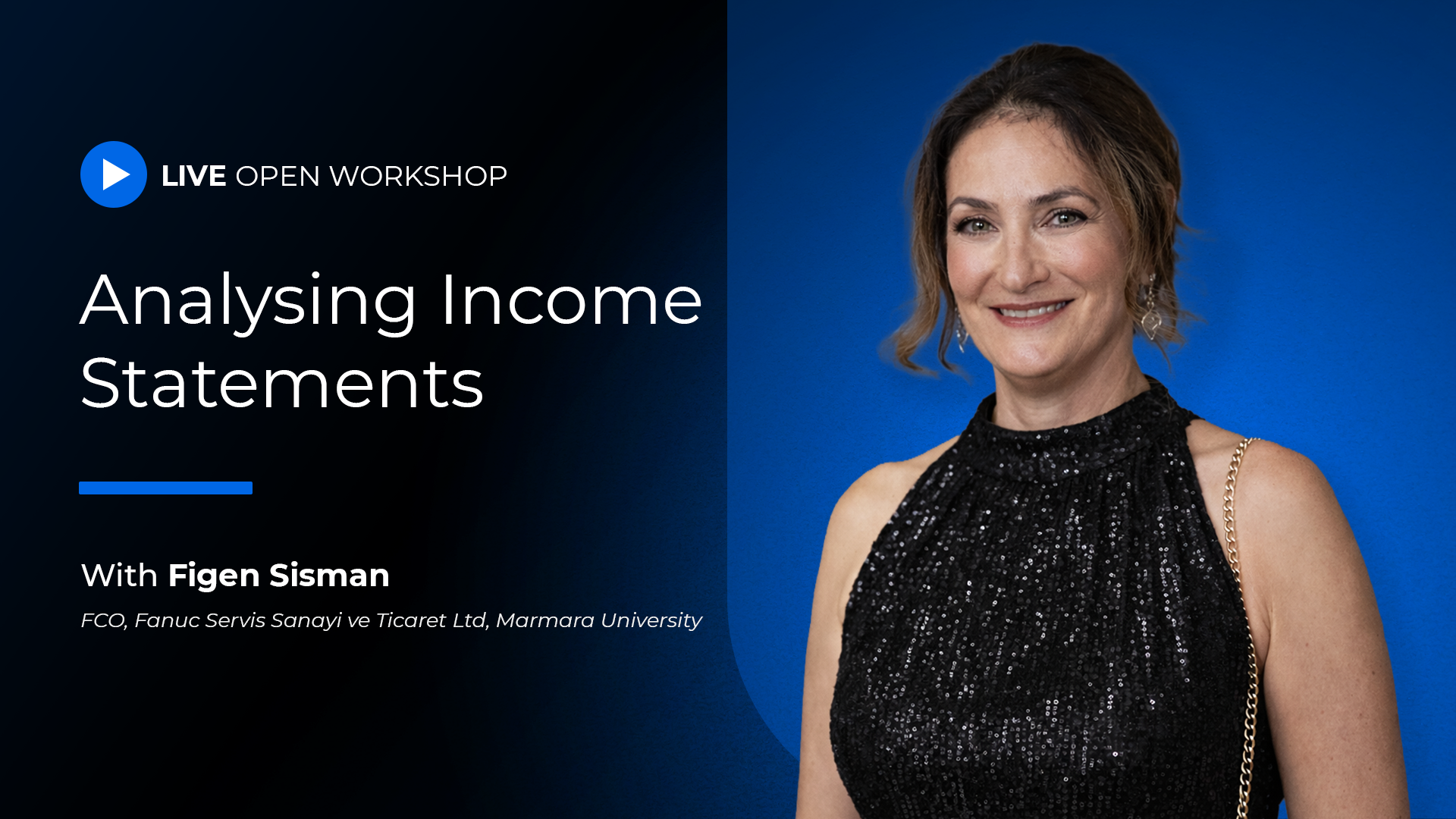
This live online workshop is delivered by Figen Sisman, FCO, Fanuc Servis Sanayi ve Ticaret Ltd, Marmara University. She equips non-finance leaders to read income statements with confidence, spot margin leaks early, and take ownership of cost and budget decisions. In this practical session, your team will decode P&L logic, link operations to profit, and build financial discipline that strengthens control and sharper decisions.

Programme Structure

Key Module 1: Why Companies Need an Income Statement

This module introduced the income statement as a fundamental financial report used to measure a company’s performance over a specific period. It explained how companies rely on the income statement to understand whether they are making a profit or a loss.

Participants explored how this report supports decision-making, performance evaluation, and communication with stakeholders such as managers, investors, and creditors. Practical discussion highlighted the risks of operating without clear visibility of financial results.

This module explained what an income statement is and how it is structured. It showed how financial data is organized to present revenues, expenses, and final profit.

Participants learned the purpose of the income statement and how it differs from other financial reports. The time-based nature of the statement (e.g., monthly, quarterly, yearly) was also clarified. A sample statement helped illustrate how financial performance is presented.

This module focused on the key components of the income statement. It covered revenue, cost of goods sold, gross profit, operating expenses, and net profit.

 Participants examined how each section contributes to the final financial result and how different types of costs are categorized. Exercises helped reinforce understanding of how business activities are reflected in each part of the statement.

This module developed participants’ ability to interpret financial results. It explained how to analyze revenue trends, cost levels, and profitability.

Participants practiced identifying important indicators such as profit margins and recognizing patterns that may signal strong performance or potential issues. Realistic examples helped them understand how to draw conclusions from the data.

This module walked participants through the process of creating an income statement. It demonstrated how companies collect financial data, organize revenues and expenses, and calculate profit.

The importance of accuracy, proper classification, and consistency was emphasized. Participants applied their knowledge by preparing a simple income statement based on given data.

This module highlighted the value of the income statement in a business context. It showed how the report helps companies evaluate performance, control costs, and make informed decisions.

 Participants discussed how income statements support planning, improve transparency, and provide insights into profitability. The session also emphasized their role in communicating financial results to internal and external stakeholders.

Business Outcomes

  • Establish clear visibility of revenue, cost structures, and profit drivers to enable faster, evidence-based decisions protecting margin and profitability across departments.
  • Standardise income statement preparation to improve financial accuracy, strengthen cost control, and reduce risk of misinformed commercial decisions impacting overall performance.
  • Equip managers to interpret profitability trends and margin indicators, enabling proactive corrective actions that increase sustainable financial performance at organisational level.


Is this right for your organisation?

This is a good fit if you need to:

  • Strengthen financial visibility by enabling managers to accurately interpret income statements, identify margin leakage, and support evidence-based commercial decisions across departments.
  • Reduce profitability risk by standardising how teams prepare and analyse income statements, ensuring consistent cost tracking and revenue performance evaluation discipline.
  • Improve strategic planning by equipping operational leaders to translate financial results into actionable insights that protect margins and drive sustainable growth.

Workshop Impact:

Where you can apply these skills immediately:

  • Prepare accurate monthly income statements by organising revenues and expenses, calculating profit correctly, and ensuring proper cost classification every reporting cycle.
  • Analyse revenue trends, cost structures, and profit margins to identify performance patterns and confidently explain financial results during routine team discussions.
  • Interpret income statement figures to spot rising expenses, declining profitability, or irregular entries, then take corrective action in daily operational decisions.

Next steps (Request team access)

We’ll reply with pricing, access options, and a simple rollout plan

Talk to an Expert

Contact Expert

Download Overview

Get PDF Guide